
Perlite vs Vermiculite: Which Is Better for Houseplants?
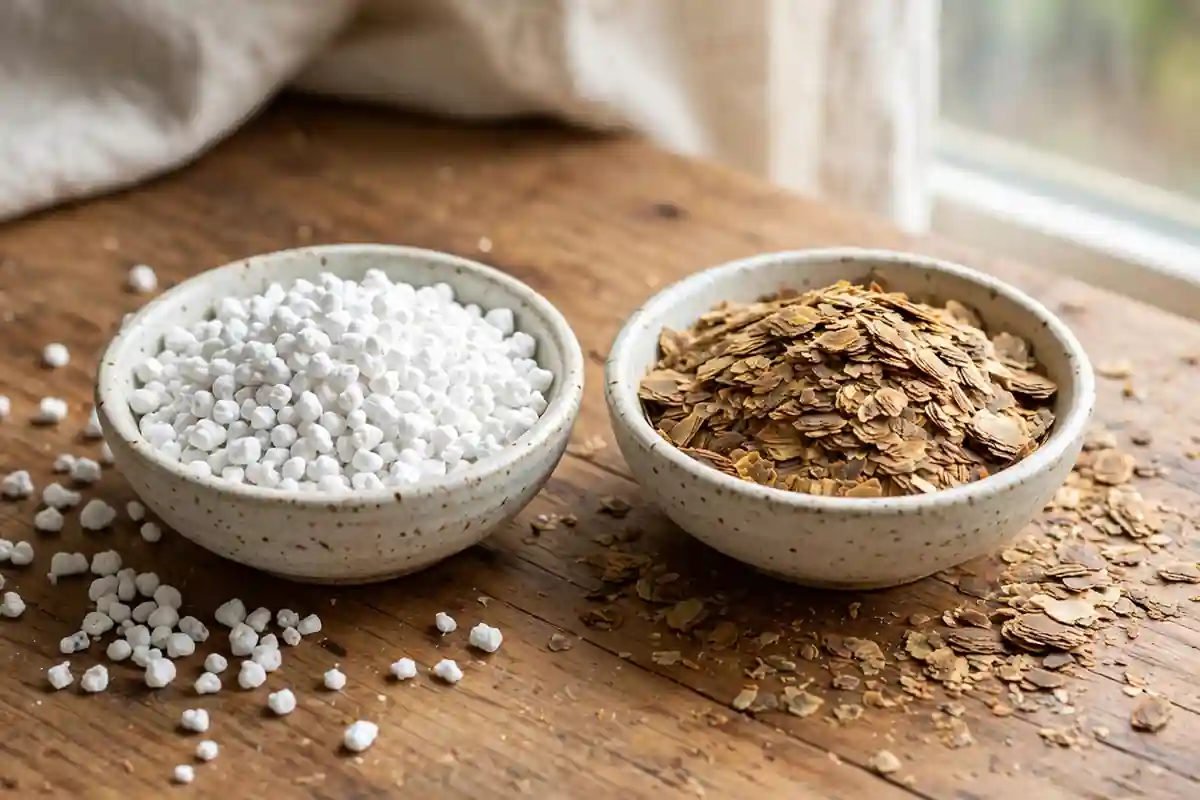
You’re standing in the garden center, staring at two bags. Both are light as air. Both promise “better drainage” and “healthier roots.” One is full of little white popcorn-like pebbles; the other holds golden, flaky layers that look like tiny accordions. If you’re trying to settle the perlite vs vermiculite debate for your houseplants, congratulations — you’ve found one of the most misunderstood matchups in indoor gardening.
Here’s the thing most guides gloss over: these two amendments do nearly opposite jobs. Perlite is the drainage specialist — it opens up soil so water flows through and air reaches roots. Vermiculite is the moisture specialist — it soaks up water like a sponge and holds it for roots to drink later. Use the wrong one and you can genuinely harm your plants. Vermiculite in a succulent mix, for example, keeps the soil wet long enough to rot roots that expected to dry out.
I learned this the expensive way years ago, when a bag of vermiculite went into what should have been a fast-draining cactus mix. The plants sulked for months before I figured out the soil never dried. This guide will save you that mistake. We’ll cover exactly what each material is, how they compare head-to-head, the nutrient-holding difference almost nobody explains, when to use each one, whether you can mix them, what the grades mean, and a quick decision table by plant type so you never have to guess again.
In This Guide
- What is perlite? (the white volcanic popcorn)
- What is vermiculite? (the golden layered mineral)
- Perlite vs vermiculite: head-to-head comparison table
- CEC and nutrient holding: the difference nobody talks about
- When to use perlite
- When to use vermiculite
- Can you mix perlite and vermiculite?
- Grades and sizes explained
- Safety and common mistakes
- Quick decision guide by plant type
- FAQs
What Is Perlite?
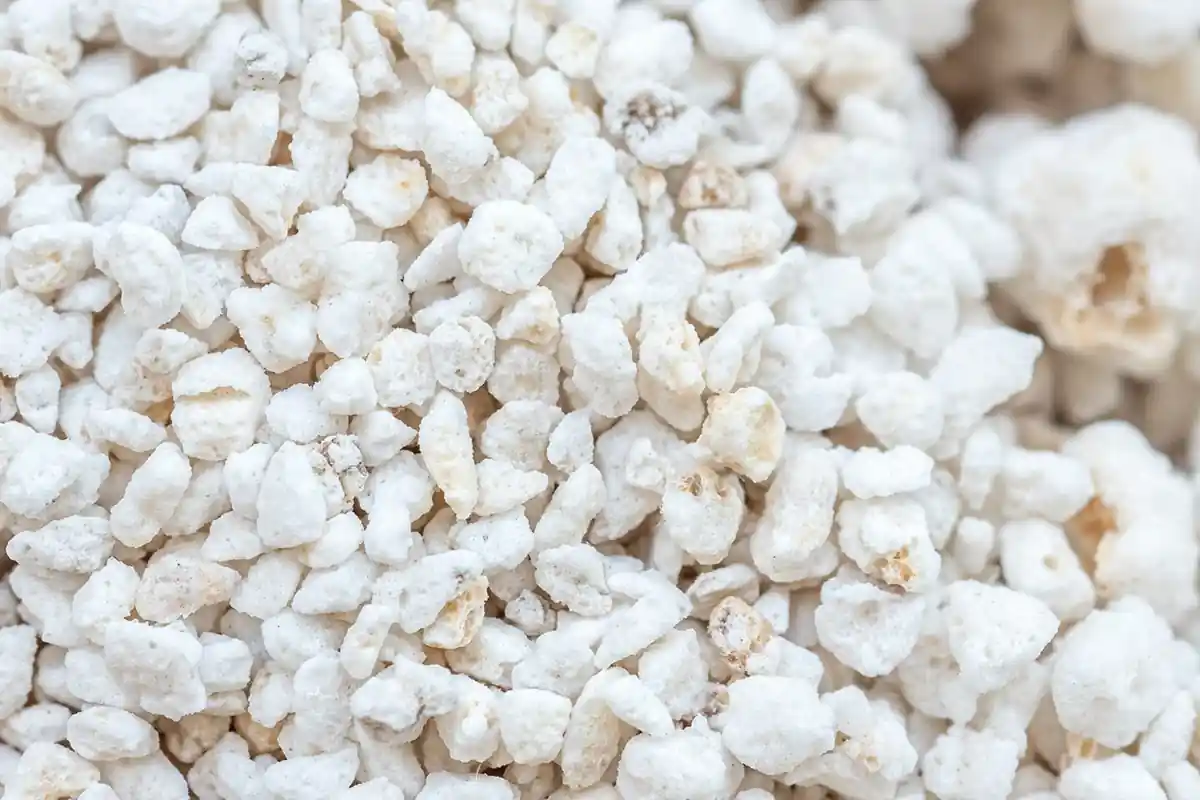
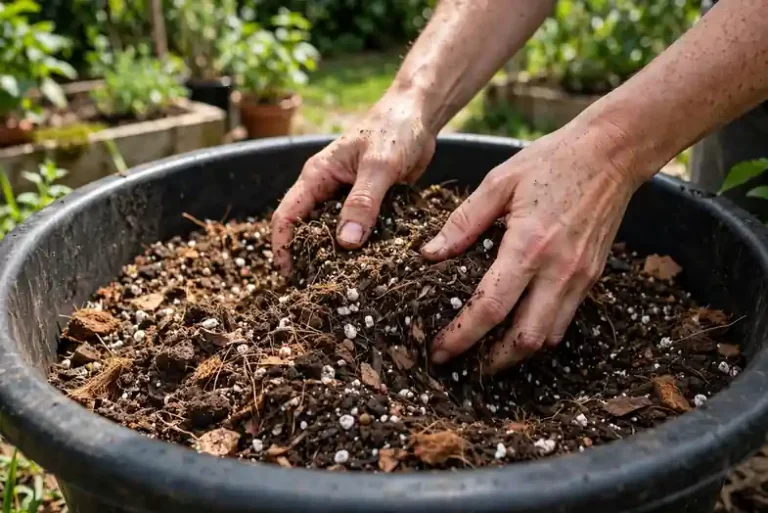
Perlite starts life as volcanic glass — essentially obsidian, the glassy rock formed when lava cools rapidly. When this glass is mined, crushed, and heated to around 1,600°F (870°C), the tiny amount of trapped water inside each particle turns to steam and pops the particle like popcorn, expanding it to many times its original volume. What comes out of the furnace is a cluster of lightweight, brilliant-white granules riddled with microscopic air pockets.
That structure is the whole point. Each perlite granule is mostly air — which makes perlite incredibly light (a bag feels nearly empty) and gives it two defining traits: it holds very little water itself, and it creates permanent air channels in soil. Water flows around perlite particles rather than into them, so a perlite-amended mix drains fast and stays airy. Roots get the oxygen they need, and excess water can’t linger long enough to suffocate them.
A few more perlite facts worth knowing:
- pH neutral (around 7.0) — it won’t shift your soil’s acidity, making it safe for virtually every houseplant.
- Sterile and inert — the manufacturing heat sterilizes it, and it contains essentially no nutrients. It doesn’t feed your plants; it just improves the physical structure of the mix.
- Doesn’t decompose — unlike bark or peat, perlite doesn’t break down over time. It keeps working in the pot for years (though it can get crushed under heavy soil and migrate upward with watering — that white crust on the surface is usually perlite that floated up, and it’s harmless).
- No nutrient holding to speak of — its cation exchange capacity (CEC) is very low, around 1.5 meq/100g. Nutrients in your fertilizer wash past it rather than sticking around. More on why that matters in a moment.
Perlite is the amendment you reach for whenever the words “well-draining” appear in a care guide — which, for houseplants, is most of the time.
What Is Vermiculite?
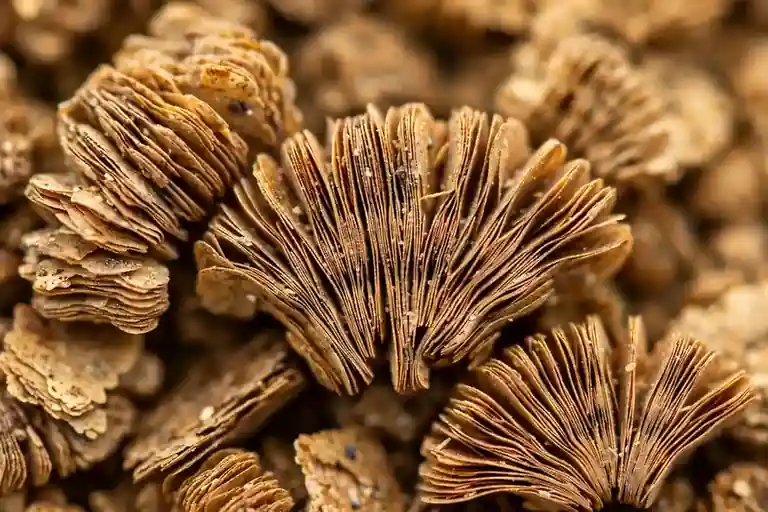
Vermiculite is a completely different mineral with a completely different personality. It’s a hydrated magnesium aluminum silicate — a phyllosilicate clay mineral in the mica family. When mined, ground, and heated to about 1,800°F (1,000°C), the water trapped between its layers flashes to steam and forces the layers apart in a process called exfoliation. The particles expand into golden-brown, accordion-like flakes with a distinctly layered, almost wormy look (the name comes from the Latin vermiculare, “to breed worms,” for exactly that appearance).
Where perlite is full of air pockets that shed water, vermiculite’s layered plates absorb and hold water — up to 200–300% of its weight by some measures, with commonly cited figures of 3–4 times its volume and up to 16 times its weight. It behaves like a sponge: it soaks up water during watering, then releases it slowly as the surrounding soil dries. A vermiculite-amended mix stays evenly moist far longer than the same mix without it.
Key vermiculite traits:
- Slightly alkaline pH (roughly 7.0–7.5, sometimes higher) — usually fine for houseplants, but worth knowing if you grow acid-lovers.
- Contains some nutrients — vermiculite naturally supplies small amounts of magnesium, potassium, calcium, and iron as it weathers. It’s not a fertilizer, but it’s not nutritionally empty either.
- High nutrient-holding capacity — this is the big one. Vermiculite’s CEC is dramatically higher than perlite’s, meaning it grabs dissolved fertilizer nutrients and holds them for roots. (Full breakdown in the CEC section below.)
- Breaks down over time — those delicate layers compress and degrade with repeated wetting, drying, and root pressure. In a pot, vermiculite typically lasts one to two growing seasons before it compacts and loses its aeration benefit. Perlite doesn’t have this problem.
- Heavier than perlite — waterlogged vermiculite adds noticeable weight to pots.
Vermiculite is the amendment you reach for when the goal is consistent moisture — seed starting, thirsty tropicals, and dry homes where soil dries out too fast.
Perlite vs Vermiculite: Head-to-Head Comparison
Here’s the full side-by-side so you can see exactly where they differ and where they overlap:
| Property | Perlite | Vermiculite |
|---|---|---|
| What it is | Expanded volcanic glass (obsidian) | Expanded mica-family clay mineral |
| Appearance | White, popcorn-like porous granules | Golden-brown, layered accordion flakes |
| Water retention | Low — holds ~3–4x its weight briefly on surfaces; sheds water | Very high — absorbs up to 3–4x its volume / ~16x its weight |
| Drainage & aeration | Excellent — creates permanent air pockets | Moderate — holds moisture; less air space when wet |
| pH | Neutral (~7.0) | Slightly alkaline (~7.0–7.5+) |
| Weight | Extremely light | Light dry, noticeably heavier when wet |
| Nutrient holding (CEC) | Very low (~1.5 meq/100g) — nutrients wash through | High — holds Ca, Mg, K, P for roots |
| Natural nutrients | Essentially none | Small amounts of Mg, K, Ca, Fe |
| Longevity in pots | Doesn’t decompose; lasts years | Compacts/degrades in 1–2 seasons |
| Sterility | Sterile from manufacturing heat | Sterile from manufacturing heat |
| Main job | Drainage + aeration | Moisture retention + nutrient buffering |
The one-line version: perlite dries soil out; vermiculite keeps soil wet. Everything else follows from that.
CEC and Nutrient Holding: The Difference Nobody Talks About
Most perlite vs vermiculite guides stop at “one drains, one holds water.” But there’s a second difference that’s arguably just as important for houseplants, and competitors almost never explain it: cation exchange capacity, or CEC.
Here’s the simple version. Dissolved fertilizer nutrients exist in water as positively charged ions (cations) — calcium, magnesium, potassium, ammonium. Soil particles with high CEC act like magnets for these ions: they grab them out of the water, hold them on their surfaces, and release them gradually as roots need them. Think of high-CEC material as a nutrient battery — it charges up when you fertilize and discharges slowly between feedings.
Vermiculite has a high CEC. When you water with liquid fertilizer, vermiculite particles capture a meaningful share of those nutrients and meter them out over days. This buffers your plants against both feast and famine: less fertilizer washes straight out the drainage holes, and roots have a steadier supply between feedings.
Perlite’s CEC is negligible (around 1.5 meq/100g — essentially zero for practical purposes). It’s chemically inert. Fertilizer solution flows past perlite particles without sticking, which means in a perlite-heavy mix, more of each feeding leaches out unused. That’s not a flaw — it’s just physics you should plan around. If your mix is heavy on perlite (as succulent and aroid mixes are), feed a little more often or use slow-release fertilizer to compensate, because each watering carries nutrients away.
This is also why vermiculite shines in seed-starting mixes: seedlings get a gentle, continuous supply of moisture and nutrients from the vermiculite, exactly when they’re too delicate for strong feeding. University horticulture references have long noted this dual role — as one extension-hosted horticulture piece describes, vermiculite “attracts nutrients such as calcium, magnesium, potassium, and phosphorous” while perlite mainly aerates. You can read that Virginia Tech–hosted comparison for the classic rundown.
Practical takeaway: in a perlite-heavy mix, fertilize on the more frequent end of your plant’s schedule; in a vermiculite-containing mix, you can lean toward the lighter end, since less nutrition is wasted.
When to Use Perlite
Reach for the white bag when drainage and airflow are the priority:
- Succulents and cacti. Non-negotiable. These plants evolved in gritty, fast-draining soils and their roots rot in persistent moisture. A typical succulent mix is 50% or more perlite (or pumice). If your succulent’s leaves are going mushy, excess moisture is suspect number one — see our guide to mushy succulent leaves for the full diagnosis.
- If you’re a chronic overwaterer. Be honest with yourself — if every plant you own is perpetually damp, perlite is your safety net. It makes overwatering much harder.
- Humid climates. In naturally humid regions (hello, Gulf Coast), soil dries slowly on its own. Perlite compensates by keeping air in the mix even when moisture lingers.
- Rooting cuttings. Perlite’s sterility plus its airy structure makes it excellent for rooting — many growers root cuttings in straight perlite or a perlite-heavy mix, where the constant air supply prevents stem rot while roots form.
- Amending dense or peaty mixes. Bagged potting soil that’s mostly fine peat compresses into a soggy brick over time. Mixing in 20–30% perlite keeps it open and drainable.
- Chunky aroid mixes. Monstera, philodendron, and other epiphytes want big air pockets around thick roots — coarse perlite plus bark is the classic combination. Our best potting soil guide breaks down exactly how these mixes come together.
How much? For average houseplants, 20–30% perlite by volume (roughly 1 part perlite to 3–4 parts potting mix). For succulents, 50% or more. For seed starting, perlite is usually the minor partner to vermiculite (more on that below).
When to Use Vermiculite
Reach for the golden bag when consistent moisture is the goal:
- Seed starting. This is vermiculite’s signature use. A fine-grade vermiculite top layer over seed trays keeps seeds evenly moist (critical for germination), its sterility prevents damping-off disease, and its gentle nutrient supply feeds seedlings without burning them.
- Moisture-loving tropicals. Ferns, calathea, peace lilies, and other plants that hate drying out do well with 10–20% vermiculite in the mix — it smooths out the peaks and valleys between waterings.
- Dry climates or forgetful waterers. If your home’s air is arid or you travel, vermiculite buys your plants extra days of moisture. It’s drought insurance in mineral form.
- Bulb and tuber storage. Vermiculite’s moisture-buffering works in reverse for storage: it keeps stored bulbs and tubers from either desiccating or sweating. Pack them in dry vermiculite in a cool, dark spot.
- Rooting moisture-sensitive cuttings. While perlite suits most cuttings, cuttings that must never dry out (many tropicals) root well in a vermiculite-heavy medium.
How much? For moisture-lovers, 10–20% vermiculite by volume is the sweet spot — enough to buffer moisture without waterlogging. For seed starting, mixes are often 50% vermiculite or more. Never use vermiculite as the main amendment for succulents, cacti, or any plant labeled “drought-tolerant” — that’s the classic perlite vs vermiculite mistake, and it ends in rot.
One caution: because vermiculite holds water so well, it can encourage surface algae or mold in constantly damp conditions. If you spot white fuzz on the soil, check whether it’s mineral crust or actual mold with our white mold guide — and let the top inch dry between waterings.
Can You Mix Perlite and Vermiculite Together?
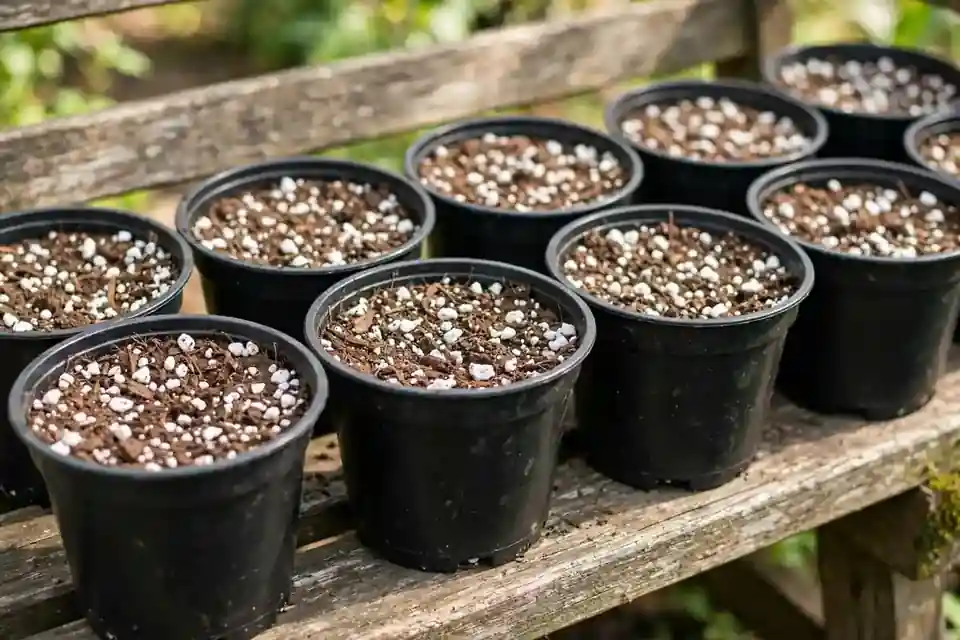
Yes — and for general-purpose houseplant soil, combining them is often better than using either alone. They complement each other: perlite guarantees drainage and air, vermiculite guarantees moisture doesn’t vanish too fast. Together they create a mix that’s both forgiving of overwatering and forgiving of underwatering. That’s the holy grail for most indoor gardeners.
Here are practical ratios (by volume) for common situations:
| Situation | Potting Soil | Perlite | Vermiculite | Why |
|---|---|---|---|---|
| General houseplants | 2 parts | 1 part | 1 part | Balanced: drains yet holds moisture |
| Succulents & cacti | 1 part | 2 parts | 0 | Maximum drainage; no moisture retention wanted |
| Moisture lovers (ferns, calathea) | 2 parts | 1 part | 1–2 parts | Extra moisture buffer for thirsty roots |
| Seed starting | 1 part (fine) | 1 part (fine) | 2 parts (fine) | Moisture + sterility for germination |
| Chunky aroid mix | 1 part | 1 part (coarse) | 0 (+ bark instead) | Epiphytes want air, not sponges |
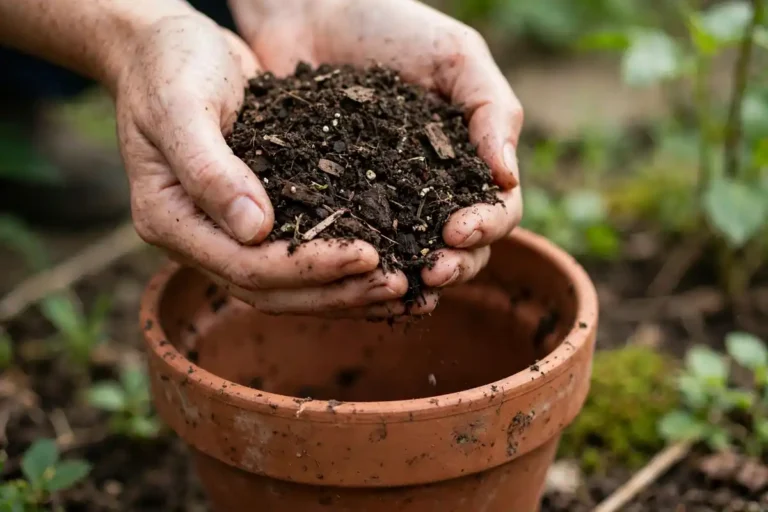
A few mixing tips: moisten both materials before mixing (the dust is unpleasant — see the safety section), blend thoroughly so you don’t get pockets of pure perlite or pure vermiculite, and remember that vermiculite degrades — refresh mixes containing it every year or two, while perlite-heavy mixes last longer. If you want full recipes built around these ratios, our DIY potting mix guide has three complete formulas you can batch-mix at home.
Grades and Sizes Explained
Walk down the amendment aisle and you’ll see “fine,” “medium,” and “coarse” on the bags. The grade matters more than most people realize — it’s one of those details competitors skip, but it genuinely affects results.
Perlite grades:
- Fine — tiny granules, best for seed starting and small pots where you want aeration without big chunks. Downside: it can sift to the bottom of large pots over time.
- Medium — the all-rounder. This is the grade in most bagged “perlite” at garden centers, and it’s right for general houseplant mixes.
- Coarse (sometimes “chunky”) — large pieces for orchids, aroids, and big containers. Creates the biggest air pockets; ideal when a plant’s roots need serious airflow.
Vermiculite grades:
- Fine — for seed starting and the top-dressing layer on seed trays. Holds the most water per volume.
- Medium — the standard for potting mixes. Good moisture buffering without going overboard.
- Coarse — for large containers and outdoor use; less prone to compacting under weight.
Which should you buy for houseplants? Medium-grade perlite covers 90% of indoor needs — grab coarse too if you grow monstera, orchids, or other epiphytes. For vermiculite, medium grade for potting mixes and fine grade if you start seeds. One practical note: the dusty fines at the bottom of any bag are still usable — just dampen them before use (dust control) and don’t use a whole pot of pure dust, which compacts.
Safety and Common Mistakes
Handling dust. Both perlite and vermiculite are dusty, and breathing any fine mineral dust repeatedly isn’t good for your lungs. The fix is simple: dampen the material before you pour or mix it (a quick spritz with a spray bottle tames nearly all airborne dust), work outdoors or in a ventilated area for big batches, and wear a basic dust mask if you’re mixing a lot. This is standard practice, not panic — millions of gardeners handle these materials safely with these precautions.
The asbestos question. Older gardeners sometimes warn that vermiculite contains asbestos. Here’s the honest history: one vermiculite mine in Libby, Montana (closed in 1990) was contaminated with asbestos, and some vintage insulation products were affected. Modern horticultural vermiculite comes from different mines and is tested — current products sold for gardening are considered safe. If you inherit a mysterious ancient bag from a garage, don’t use it; a fresh bag from the garden center is fine.
Common mistakes to avoid:
- Vermiculite for succulents. The number-one perlite vs vermiculite error. Succulents + moisture-retentive amendment = rot. Perlite (or pumice/grit) only.
- Growing in 100% perlite long-term. Perlite has no nutrients and negligible CEC. Cuttings root in it beautifully, but a plant living in straight perlite needs constant dilute feeding — it’s essentially hydroponics without the system.
- Fine grades in big pots. Fine perlite or vermiculite in a large container migrates and compacts into a dense layer. Match the grade to the pot size: bigger pots, coarser grades.
- Never refreshing vermiculite mixes. Vermiculite physically breaks down within a season or two. If a two-year-old mix has turned dense and soggy, the vermiculite has likely degraded — repot with fresh material.
- Assuming they’re interchangeable. A nursery employee once told a gardener they were (this actually happened — it’s documented in horticulture literature). They’re not. Opposite jobs. Now you know.
Quick Decision Guide by Plant Type
If you just want the answer, find your plant below:
| Plant / Situation | Use This | Suggested Ratio |
|---|---|---|
| Succulents, cacti, snake plant | Perlite only | 50%+ perlite in mix |
| Pothos, philodendron, spider plant | Perlite (main) | 20–30% perlite |
| Monstera, orchids (epiphytes) | Coarse perlite + bark | Chunky aroid-style mix, no vermiculite |
| Ferns, calathea, peace lily | Perlite + vermiculite | 20% perlite + 10–20% vermiculite |
| Seed starting | Fine vermiculite (+ fine perlite) | Up to 50% vermiculite |
| Chronic overwaterer | Extra perlite | Bump perlite to 30–40% |
| Dry home / forgetful waterer | Add vermiculite | 10–20% vermiculite |
| Rooting cuttings (most) | Perlite | Straight or perlite-heavy |
| Bulb/tuber storage | Dry vermiculite | Pack bulbs in it, store cool and dark |
When in doubt, remember the one-liner: wet feet? perlite. Dries too fast? vermiculite. Get that right and you’re ahead of most gardeners.
Frequently Asked Questions
Buy perlite first — it’s the more versatile of the two for indoor growing. Most houseplants want drainage and aeration more than they want extra moisture retention, so medium-grade perlite improves nearly any bagged potting mix. Add vermiculite later if you grow moisture-lovers (ferns, calathea), start seeds, or live somewhere arid. If you can only buy one bag, make it perlite.
Absolutely — they complement each other well. A general mix of 2 parts potting soil, 1 part perlite, and 1 part vermiculite drains freely thanks to the perlite while the vermiculite buffers moisture between waterings. Just don’t use this combo for succulents or cacti — leave the vermiculite out for anything drought-tolerant.
Perlite, by a wide margin. Succulents need soil that dries quickly and completely, and perlite’s drainage-first behavior delivers exactly that. Vermiculite’s whole job is holding moisture — the opposite of what succulent roots want — and it’s a common cause of rot in succulent pots. Use 50% or more perlite (or pumice/coarse grit) in succulent mixes and skip vermiculite entirely.
It doesn’t “go bad,” but it does physically degrade. The delicate layered flakes compress with repeated watering and root pressure, typically losing their structure within one to two growing seasons. When that happens the mix gets dense and soggy — refresh it at repotting time. Perlite doesn’t have this problem and keeps working for years.
Occasional brief exposure while potting a plant is not a meaningful hazard, but you shouldn’t habitually breathe any fine mineral dust. Dampen perlite before pouring to suppress dust, work in a ventilated space for large batches, and wear a dust mask if you’re mixing a lot. These simple precautions make handling it completely routine.
Coarse builder’s sand or horticultural grit can substitute for perlite’s drainage role, but never use fine play sand or beach sand — the tiny particles fill air spaces and turn the mix into concrete. Even coarse sand is much heavier than perlite and adds no aeration benefit beyond drainage. Perlite remains the better choice for indoor pots, where weight and aeration both matter.
That’s algae growing on constantly damp perlite at the soil surface — harmless to the plant, just unsightly. It means the surface stays wet too long. Let the top inch of soil dry between waterings, improve air circulation, and you can scrape off the green layer. A top dressing of dry coarse perlite or grit also discourages it.
Vermiculite wins for seed starting. Seeds need constant, even moisture to germinate, and fine vermiculite holds water right around the seed while its sterility prevents damping-off disease. Most seed-starting mixes are vermiculite-heavy, sometimes with fine perlite added for a bit of air. Save the perlite-dominant mixes for after seedlings develop true leaves and move to pots.
No — modern horticultural vermiculite is tested and considered safe. The asbestos concern traces to a single Montana mine (closed in 1990) whose ore contaminated some old insulation products. Today’s garden vermiculite comes from different sources. Still, always dampen it before handling to control dust, as you should with any dry mineral amendment.
For average tropical houseplants (pothos, philodendron, dracaena), mix about 1 part perlite to 3–4 parts potting soil (20–30% perlite). Succulents want far more — roughly half perlite. Moisture-lovers do well with the standard perlite amount plus 10–20% vermiculite. There’s no single perfect ratio; match it to how quickly your home dries pots out and how thirsty the plant is.
One Comment