Why Is My Snake Plant Drooping? 7 Causes and How to Fix It
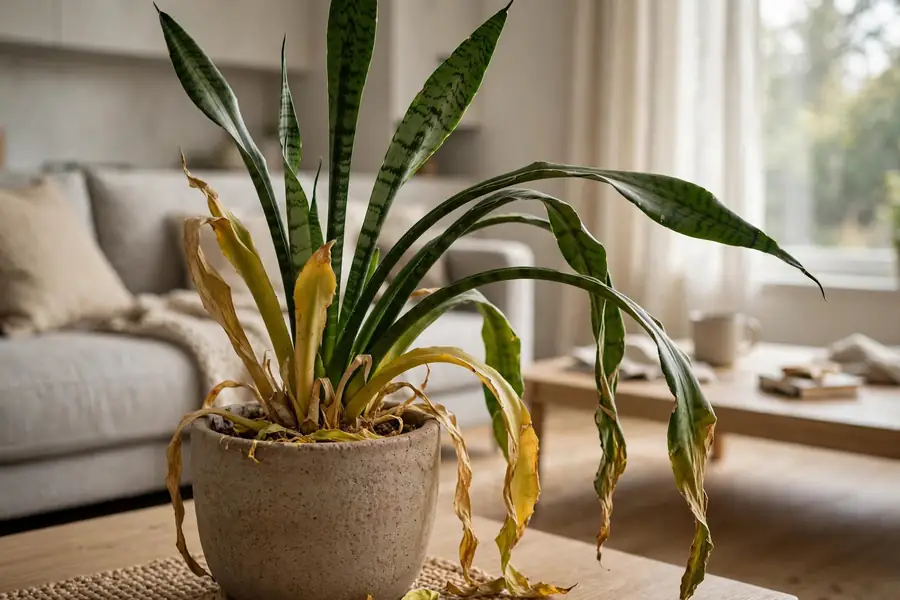
Snake plants (Sansevieria trifasciata, also sold as Dracaena trifasciata) are famous for their stiff, upright leaves — so when those leaves start drooping, leaning, or flopping over, something is wrong. The good news: in most cases the cause is simple and fixable.
Start with the 10-second test: gently squeeze a drooping leaf near its base. If it feels soft and mushy, you’re almost certainly dealing with overwatering. If it feels thin, wrinkled, and papery, it’s underwatering. That one distinction narrows it down immediately — here’s the full breakdown.
In This Guide
- The mushy-vs-wrinkled test
- 7 causes of drooping snake plant leaves (with fixes)
- Step-by-step: saving a snake plant with root rot
- Prevention checklist
- FAQs
The 10-Second Test: Mushy or Wrinkled?
| What the leaf feels like | What it means | Most likely cause |
|---|---|---|
| Soft, mushy, or squishy at the base | Cells bursting with excess water | Overwatering / root rot |
| Thin, wrinkled, papery, curled inward | Cells collapsed from lack of water | Underwatering |
| Firm but leaning from the base | Structural issue, not water | Pot too large, root-bound, or low light |
1. Overwatering (the #1 cause)
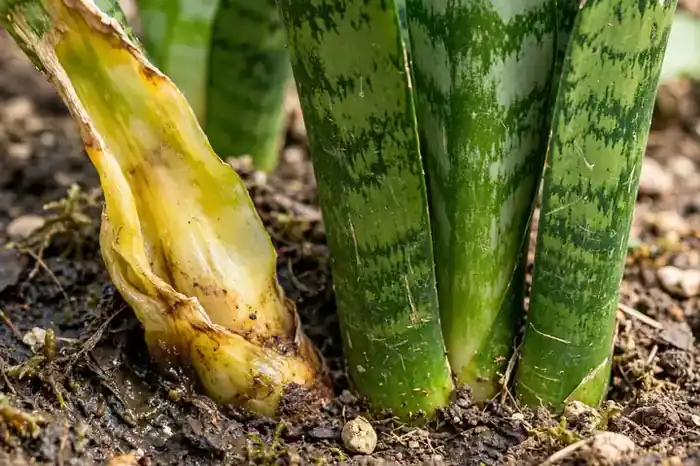
Snake plants store water in their thick, succulent-like leaves and rhizomes — they’re built for drought, not swamps. Water too often and the roots sit in soggy soil, rot sets in, and the leaves lose the internal pressure that holds them upright. They go mushy at the base, crease, and flop over.
Signs: Leaves soft and mushy, especially near the soil; yellow leaves at the base; foul smell from the soil; soil stays wet for weeks; mold growing on the soil.
Fix: Stop watering now. If only 1–2 leaves are affected, let the soil dry out completely (this can take 2–4 weeks) and the plant may stabilize. If many leaves are mushy, unpot it — trim all black, slimy roots, let the healthy roots air-dry for a day, and repot in fresh, fast-draining cactus/succulent mix. See the rescue protocol below.
2. Underwatering (Yes, Really)
Snake plants are drought-tolerant, not drought-proof. Ignore one for 2–3 months in a warm, bright room and the leaves will wrinkle, curl, and eventually flop from sheer dehydration.
Signs: Leaves thin, wrinkled, or curled like a taco; soil bone-dry and shrunken from the pot edges; pot feels feather-light; no mushiness — just papery weakness.
Fix: Water thoroughly until it drains from the bottom. If the soil is so dry it’s hydrophobic (water runs straight through), bottom-water: set the pot in a basin of water for 20–30 minutes so the soil can actually absorb it. Drooping from underwatering looks similar in other houseplants — the wrinkled texture is the giveaway.
3. Pot Too Large
This one surprises people. A snake plant in an oversized pot sits in a big mass of soil that stays wet far longer than the roots can handle — effectively overwatering even with a careful schedule.
Signs: Plant was recently repotted into a much bigger pot; soil stays damp for weeks; drooping started after repotting.
Fix: Repot into a container only 1–2 inches wider than the root ball. Snake plants actually like being slightly snug.
4. Poor Drainage / Wrong Soil
Dense, moisture-holding potting mix or a pot without drainage holes creates the same swampy conditions as overwatering. West Virginia University Extension’s houseplant guide specifically recommends well-drained soil for snake plants and warns against overwatering (see their houseplant care table).
Signs: Water pools on the surface; soil feels heavy and compacted; no drainage hole in the pot.
Fix: Repot into a cactus/succulent mix (or regular potting soil with 40–50% perlite or coarse sand added). Always use a pot with drainage holes. Terracotta is ideal — it wicks moisture away.
5. Too Little Light
Here’s what most plant parents get wrong: snake plants tolerate low light, but they don’t thrive in it. In a dark corner with infrequent watering, growth stalls, leaves weaken over months, and eventually flop.
Signs: Very slow or no new growth; leaves pale, thin, and weak rather than mushy; plant sits far from any window.
Fix: Move it to bright indirect light (an east or north-facing window is perfect). It can even handle some direct morning sun. Don’t swing it straight into harsh afternoon sun — acclimate gradually over 1–2 weeks.
6. Root-Bound Plant
A snake plant that’s been in the same pot for years can become so root-packed that water can’t penetrate evenly and nutrients run out. Growth stalls and outer leaves may lean and collapse.
Signs: Roots circling densely or pushing out of drainage holes; water runs straight through the pot; plant hasn’t been repotted in 3+ years.
Fix: Repot into a container 1–2 inches larger with fresh mix. Gently loosen the root ball first. Spring is the ideal time.
7. Pests or Physical Damage
Less common, but severe mealybug or spider mite infestations weaken leaves, and a leaf that’s been bent or creased (by a pet, a fall, or rough handling) will never stand straight again.
Signs: Visible pests, webbing, or cottony clusters; a single leaf with a sharp crease or bend.
Fix: Treat pests with neem oil or insecticidal soap. For a creased leaf, you can stake it upright with a bamboo stick and soft ties for support — or simply trim it off at the base if it bothers you.
Step-by-Step: Saving a Snake Plant with Root Rot
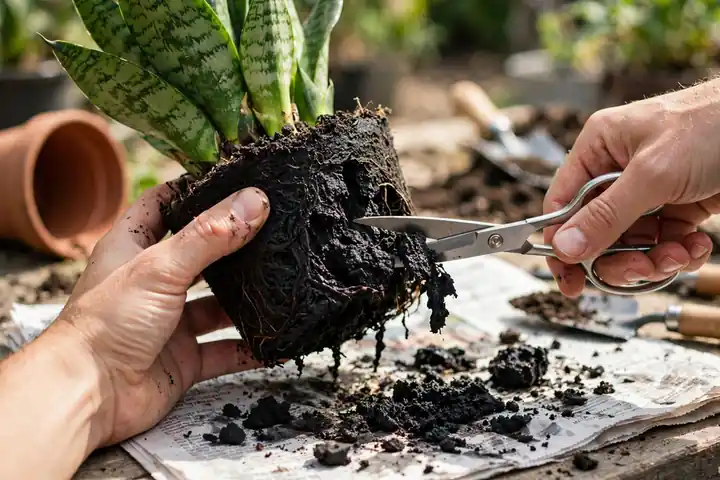
- Remove the plant from its pot and shake off all wet soil.
- Rinse the roots gently under lukewarm water so you can see clearly.
- Trim ruthlessly: cut away every black, brown, or mushy root with sterilized scissors. Healthy roots are white/tan and firm. Also remove any fully mushy leaves at the base.
- Disinfect the cuts — a quick dip in diluted hydrogen peroxide (1 part 3% peroxide to 3 parts water) helps.
- Air-dry the plant out of soil for 24 hours in a shaded, airy spot so cuts callus over.
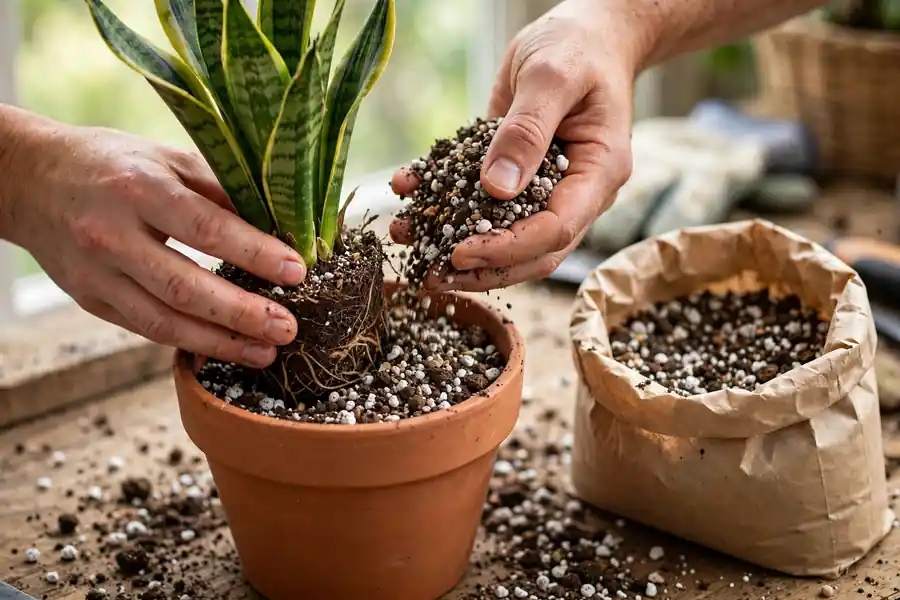
- Repot in dry, fast-draining cactus mix in a snug pot with drainage holes.
- Wait 5–7 days before watering lightly. Then water only when the soil is completely dry — for most homes, that’s every 3–6 weeks.
Fallen leaves won’t stand back up, but new growth from the rhizome will emerge upright within weeks if the roots recover.
Prevention Checklist
- Water only when soil is 100% dry — when in doubt, wait another week
- Always use a pot with drainage holes; terracotta preferred
- Use cactus/succulent mix, not dense regular potting soil
- Bright indirect light (not a dark corner)
- Repot only 1–2 inches up, every 2–3 years
- In winter, water roughly half as often
Frequently Asked Questions
Mushy, rotted leaves won’t recover — remove them. Leaves that are merely wrinkled from underwatering often plump back up within days of proper watering. New growth will always emerge upright if the roots are healthy.
There’s no fixed schedule. In a bright, warm room: every 2–4 weeks. In low light or winter: every 6–8 weeks. Always check that the soil is completely dry first — mushy leaves in succulents follow the same rule.
Yes, often. Cut away all rot, let the rhizome callus for a day or two, then place it in dry cactus mix or even water-propagate the rhizome. Snake plants are remarkably resilient.
Usually transplant shock combined with soil staying too wet, or the new pot is too large. Keep it in bright indirect light, don’t water for a week after repotting, and make sure the pot isn’t oversized.
No. Snake plants prefer dry air and misting invites fungal problems. If your home is very dry, that’s actually fine for this plant.