Why Are My Pothos Leaves Turning Yellow? 7 Causes & Fixes
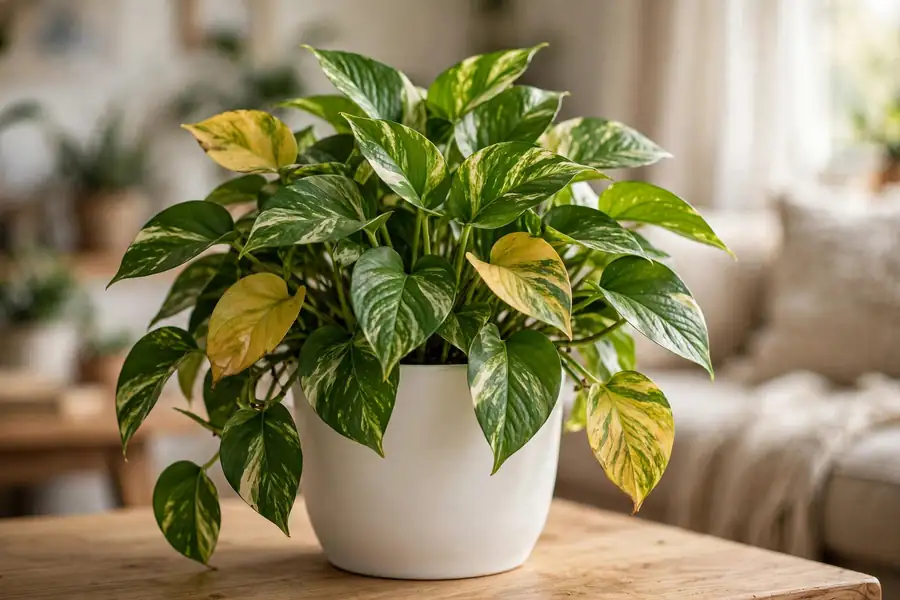
If your pothos leaves are turning yellow, overwatering is the most likely cause — but it’s not the only one. Yellow leaves on a pothos (Epipremnum aureum, also called devil’s ivy) can also signal too much direct sunlight, natural aging, nutrient deficiency, cold drafts, or pests.
The shortcut: look at the pattern. Uniform yellowing that starts from the bottom leaves and moves up usually means too much water. Yellow tips with crispy brown edges point to underwatering or dry air. Once you match the pattern, the fix is straightforward. Use the diagnosis table below to identify your plant’s problem in under a minute, then jump to the matching fix.
In This Guide
- Quick diagnosis table: match your symptom to the cause
- The 7 causes of yellow pothos leaves (with fixes)
- Step-by-step: how to rescue an overwatered pothos
- Prevention checklist
- FAQs
Quick Diagnosis Table
| What you see | Most likely cause | Jump to fix |
|---|---|---|
| Whole leaves turn yellow evenly, starting from the bottom | Overwatering / root rot | Cause #1 |
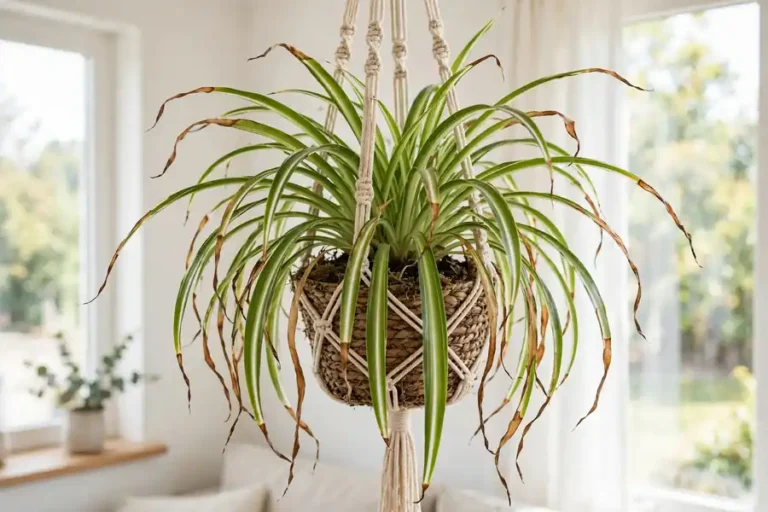
| Yellow or brown crispy tips and edges | Underwatering or low humidity | Cause #2 |
| Pale yellow leaves, bleached patches | Too much direct sun | Cause #3 |
| Only 1–2 oldest leaves yellowing, rest healthy | Natural aging | Cause #4 |
| Uniform pale yellowing, slow growth | Nutrient deficiency | Cause #5 |
| Yellowing after moving the plant | Cold draft or temperature shock | Cause #6 |
| Yellow speckles, sticky residue, fine webbing | Pests | Cause #7 |
1. Overwatering (the #1 cause)
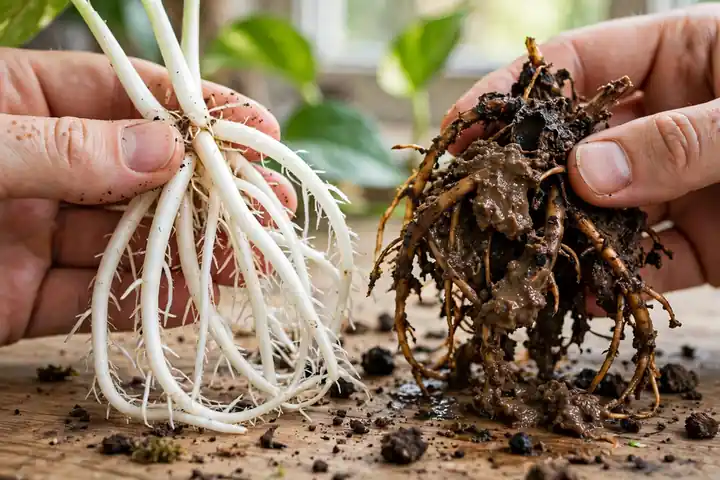
Pothos roots need oxygen as much as water. When soil stays soggy, roots suffocate and begin to rot — and a plant with damaged roots can’t feed its leaves, so they turn yellow and drop. This is the classic “yellow pothos leaves” story: the owner waters on a schedule instead of checking the soil.
Signs: Soil stays wet for 7–10+ days after watering; yellowing starts at the bottom and spreads upward; leaves feel soft or limp; you may notice white mold on the soil surface or fungus gnats hovering around the pot; the pot feels heavy.
Fix: Stop watering immediately. Let the top 2 inches of soil dry out completely. If the soil is still soggy after a week, unpot the plant, trim any black or mushy roots with clean scissors, and repot in fresh, well-draining mix. Going forward, water only when the top 1–2 inches feel dry — lift the pot to learn its “dry weight.”
2. Underwatering or Very Dry Air
On the flip side, a pothos left too dry will sacrifice leaf tips first. U.S. homes often drop to 20–35% humidity in winter, and pothos — a tropical understory plant — notices.
Signs: Yellow or brown crispy tips and edges; soil pulls away from the pot sides; leaves feel papery and thin; the pot feels very light.
Fix: Water thoroughly until it drains from the bottom, then wait. For dry air, group plants together, use a pebble tray, or run a small humidifier nearby. Misting helps for about 20 minutes — it’s not a real solution on its own.
3. Too Much Direct Sunlight
Pothos tolerates low light beautifully, but harsh direct sun — especially through a south-facing window — scorches the foliage. Clemson Extension specifically notes that direct sun can cause yellowing in pothos (see their pothos growing guide).
Signs: Pale, bleached, or yellow patches on the leaves facing the window; leaf edges look scorched; the rest of the plant is fine.
Fix: Move the plant back a few feet from the window or hang a sheer curtain. Bright indirect light is the sweet spot — near an east or north-facing window is ideal.
4. Natural Aging (No Fix Needed)
Here’s the good news: if only one or two of the oldest, lowest leaves are yellowing while everything else looks vibrant, your plant is simply shedding old foliage to make room for new growth.
Signs: 1–2 bottom leaves yellow occasionally; new growth is green and healthy; no other symptoms.
Fix: None needed. Snip off the yellow leaf at the stem with clean scissors and carry on.
5. Nutrient Deficiency
A pothos that’s been in the same pot for a year or more may have exhausted its soil. Nitrogen deficiency shows as uniform pale yellowing, often starting with older leaves, plus noticeably slow growth.
Signs: Overall pale or yellow-green color; new leaves smaller than usual; very slow growth; no watering issues.
Fix: Feed with a balanced liquid houseplant fertilizer (like 20-20-20) diluted to half strength, once a month during spring and summer. Skip fertilizer in fall and winter. If the plant is severely root-bound, repot into fresh mix first — fertilizer can’t fix a pot full of exhausted soil.
6. Cold Drafts or Temperature Shock
Pothos likes it warm: 65–85°F (18–29°C). A blast of cold air from a drafty window, an AC vent, or a recently opened door in winter can shock the plant into yellowing.
Signs: Yellowing appears suddenly after a cold snap or after moving the plant; leaf edges may turn black; the plant sits near a window, door, or vent.
Fix: Move it away from drafts and vents. Keep it in a spot that stays above 60°F (15°C) year-round. Damaged leaves won’t recover — trim them and wait for new growth.
7. Pests
Spider mites, mealybugs, and scale all feed on pothos sap, and the damage shows as yellow speckling or mottling. Check carefully — these pests are small.
Signs: Tiny yellow speckles rather than whole-leaf yellowing; fine webbing (spider mites); white cottony clusters (mealybugs); sticky residue on leaves.
Fix: Wipe leaves with a damp cloth, then treat with neem oil or insecticidal soap, covering tops and undersides. Repeat weekly for 3 weeks. Isolate the plant until pests are gone.
Step-by-Step: Rescuing an Overwatered Pothos
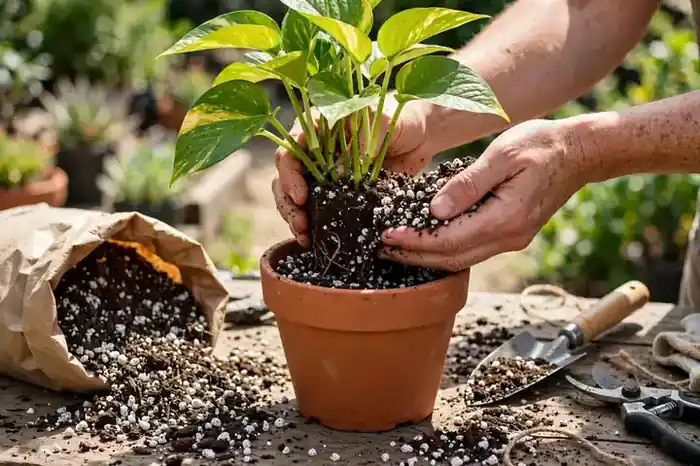
If overwatering is your diagnosis, follow this protocol:
- Stop watering and move the plant to bright indirect light with good airflow.
- Unpot the plant and gently shake off wet soil from the roots.
- Inspect the roots. White and firm = healthy. Brown/black and mushy = rotted.
- Trim all rotted roots with sterilized scissors. Also remove fully yellow leaves — they won’t recover.
- Let the root ball air-dry for a few hours on newspaper.
- Repot in fresh, airy mix (standard potting soil + 30% perlite) in a pot with drainage holes. Don’t use a pot much bigger than the root ball.
- Wait 3–5 days before watering lightly. Then water only when the top 2 inches are dry.
Most pothos bounce back within 2–4 weeks with new growth.
Prevention Checklist
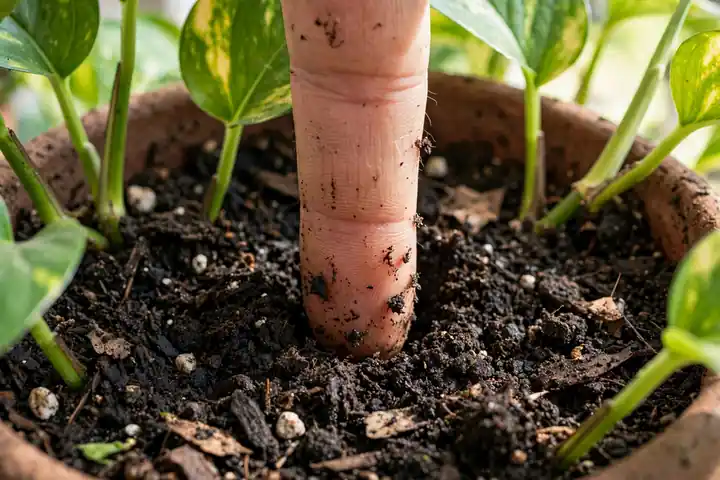
- Water only when the top 1–2 inches of soil are dry — never on a fixed schedule
- Always use a pot with drainage holes; empty the saucer after watering
- Bright indirect light; no harsh midday sun
- Feed monthly in spring/summer, never in winter
- Keep away from cold drafts and heating vents
- Check leaves monthly for early pest signs
Frequently Asked Questions
Yes. Fully yellow leaves won’t turn green again, and removing them lets the plant redirect energy to healthy growth. Cut at the base of the leaf stem with clean scissors.
No — once a leaf has fully yellowed, the chlorophyll is gone and it won’t recover. Focus on new growth, which should emerge green if you’ve fixed the cause.
There’s no fixed schedule — it depends on light, pot size, and season. Check the top 1–2 inches of soil; water thoroughly only when dry. In most homes that’s every 1–2 weeks.
Pothos grown in water can yellow from nutrient deficiency (plain water has no nutrients) or from light/temperature stress. Add a drop of liquid fertilizer monthly and keep the jar in bright indirect light.
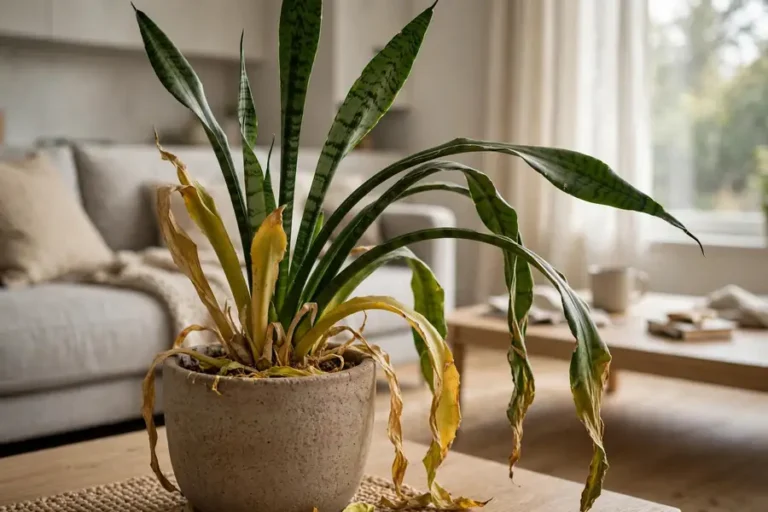
No. While overwatering is the most common cause, the pattern matters — diagnosing yellow leaves by their pattern applies to most houseplants. Use the table at the top of this guide to match your symptom.
One Comment